The Five Rabbit Welfare Needs-Rabbit Awareness Week
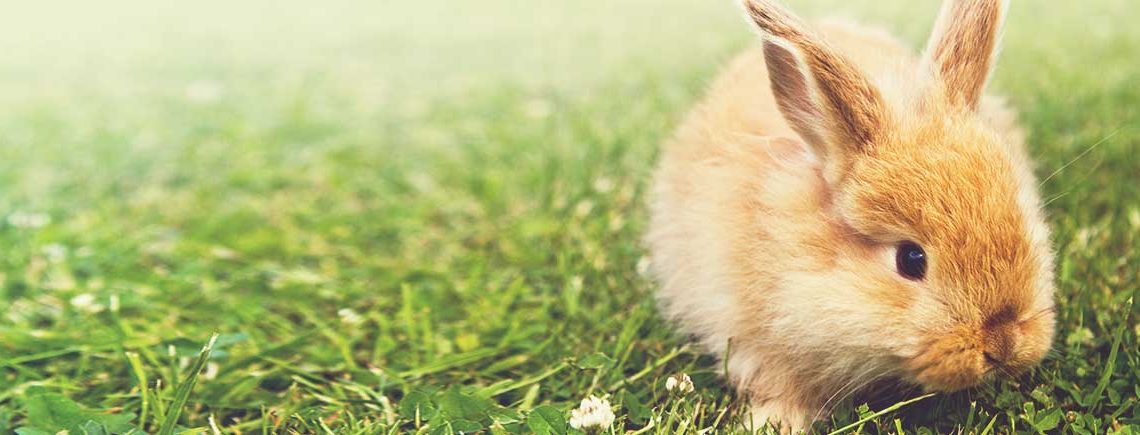
The 24th-28th June 2025 is ‘Rabbit Awareness Week’ and is the perfect time to shine a spotlight on our long-eared companions and the care they deserve. Often misunderstood as low-maintenance pets, rabbits have complex needs that require attention, knowledge, and commitment. From providing the right diet and housing, to ensuring regular veterinary check-ups and social interaction, rabbit care is both rewarding and essential for their wellbeing.
In this blog, the experts at Burgess Excel will explore 5 rabbit welfare needs to help you become a more informed and compassionate rabbit owner; not just this week, but all year round!
Rabbits are lovely animals to keep for more than just a few reasons:
Lively – Rabbits are extremely energetic creatures and they’re great to watch running and jumping around.
Social – Rabbits are extremely sociable and highly intelligent. When looked after correctly and provided with both bunny friends and a caring owner, they can become fantastic companions.
Clean – They are great at keeping themselves clean and can even be litter trained!
If you’re thinking of keeping rabbits it’s important that you understand the commitments involved. Many people get rabbits as they believe they are ‘easy’ to look after. However, rabbits require a high level of both monetary investment and commitment from their owners. They also have complex dietary needs. We recommend getting some advice from our expert Pet Care team in Petmania if you are thinking of keeping rabbits.
Nutrition
Rabbits need high levels of fibre in their diet. Without high fibre foods their digestive systems will not work correctly; their gut should be in constant motion with the right balance of fibre, without this they are susceptible to gut stasis.
Rabbits’ teeth are designed to continually grow as they get worn down by the fibrous grasses they feed on in the wild. If rabbits do not get enough abrasive foods their teeth will become overgrown making it painful for them to eat at all. That’s why it’s so important that as an owner you ensure that your rabbits’ diets are made up of roughly 85-90% high quality feeding hay or grass.
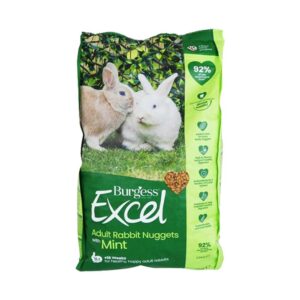
Rabbits also have a tendency to selectively feed, if you feed a muesli style diet they are likely to eat the high starch and sugary elements of food leaving the higher fibre pieces. Selective feeding has been shown to increase the risk of a variety of illnesses. Therefore, it is important that you feed a nutritionally balanced high-fibre nugget or pellet in order to avoid this.
It’s also extremely important that you stick to feeding your rabbits according to feeding guides on pack. Overfeeding nuggets or treats can reduce hay intake and lead to obesity.

Exericise
As well as having appropriate housing, there are activities you can do with your rabbits to keep them fit, happy and healthy!
Rabbits are very inquisitive and enjoy exploring. They will play happily with plastic tubes and cardboard boxes which also make good hiding places; being prey animals by nature rabbits can scare easily. It’s also a good idea to have a range of suitable toys and hiding spots, you can move these around your rabbits environment each week to keep them interested.
Make an outdoor exercise run. Rabbits like to hop around, play, rummage in the grass and graze. The bigger you can make the run, the better, but make sure you bury the wire at least 40cm into the ground, so your rabbits can’t burrow out and escape.

Companionship
Rabbits are extremely sociable animals and can get depressed without social interaction with other bunnies. You should keep rabbits in at least pairs where possible, adopting siblings is great as they already know each other so are less likely to fight.
If you are introducing rabbits to each other for the first time you should introduce them slowly and follow your vet’s advice. All rabbits kept together should be neutered, even siblings, to avoid unwanted pregnancies.
If one of your rabbits has passed away and you want to adopt another to keep the remaining rabbit company then a good rabbit rescue centre will often help with the bonding process.
Disease & Protection
RVHD1
About the virus
Rabbit Viral Haemorrhagic Disease 1 (RVHD1) is an extremely infectious virus that is usually fatal. The RVHD1 virus kills by causing internal bleeding.
Symptoms
RVHD1 often has no symptoms, meaning that it is very hard to spot. There is sometimes bleeding from body openings such as the nose, eyes and/or anus, but these are very easy to miss without daily checks.
Prevention
Your vet can vaccinate your rabbits against RVHD1 (this is often done with the Nobivac+ combined vaccination for myxomatosis, RVHD1 and RVHD2). Your vet will then advise what booster vaccinations your rabbit will need (usually every 12 months).
RVHD2
About the virus
Rabbit Viral Haemorrhagic Disease 2 (RVHD2) is a new strain of the virus RVHD1. Cases of the disease were first reported in the UK in 2015. As with RVHD1 the virus causes internal bleeding.
Symptoms
RVHD2 often has no symptoms, meaning that it is very hard to spot early on. Where symptoms do occur these signs are easily confused with other health conditions: fever, lethargy, neurological signs (coma) and blood clotting problems.
Prevention
Your vet can vaccinate your rabbits against RVHD2 (this is often done with the Nobivac+ combined vaccination for myxomatosis, RVHD1 and RVHD2). Your vet will then advise what booster vaccinations your rabbit will need (usually every 12 months).
Myxomatosis
About the disease
Myxomatosis has been present in the UK since it was introduced from South America in the 1950s. It killed a very high percentage of the wild rabbits, and still kills many wild and pet rabbits every year.
Symptoms
The full-blown form of myxomatosis affects the eyelids, the skin of the ears, lips and genitals causing swellings. There is a purely skin form of myxomatosis, which isn’t usually fatal, it causes small thickened lumps of skin to form on the eyelids, nose, head and sometimes the shoulders. These typically fall away after 2-3 weeks.
Prevention
Your vet can vaccinate your rabbits against myxomatosis (this is often done with the Nobivac combined vaccination for myxomatosis and RVHD1). Your vet will then advise what booster vaccinations your rabbit will need (usually every 6-12 months).
Housing
Your rabbits’ housing should be permanently attached to a larger space within which they can exercise freely in both daytime and night-time, whether this is a safe bunny-proofed room indoors or a large run outdoors. The housing itself should be as big as possible but at least 2 feet high, 2 feet wide and 6 feet long.
The run area should be at least 3 feet high, 6 feet wide and 10 feet long so that your bunnies can run around as they would do in the wild. However, it is good to give your rabbits as much space as possible so that they can exercise as they would in the wild.

For more on taking care of your rabbit, make sure to talk to a member of our in-store team or check out our intensive Rabbit care guide. For more on Rabbit Awareness Week, visit the link here.
Shop Rabbit Food
-
Food, Other Pet Offers, Rabbit Food, Shop By Pet, Small Animal, Special Offers
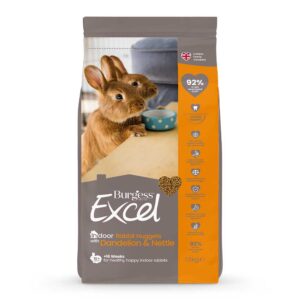
BURGESS EXCEL Adult Rabbit Oregano, 1.5Kg
Original price was: €8.99.€7.19Current price is: €7.19. -
Food, Other Pet Offers, Rabbit Food, Shop By Pet, Small Animal, Special Offers
BURGESS EXCEL Indoor Rabbit Light, 1.5kg
Original price was: €8.99.€7.19Current price is: €7.19. -
Food, Other Pet Offers, Rabbit Food, Shop By Pet, Small Animal, Special Offers
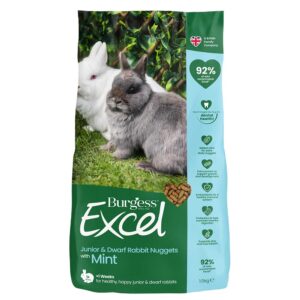
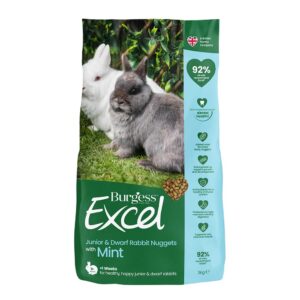
BURGESS EXCEL Junior/Dwarf Rabbit Nuggets Mint, 1.5kg
Original price was: €8.99.€7.19Current price is: €7.19. -
Food, Other Pet Offers, Rabbit Food, Shop By Pet, Small Animal, Special Offers
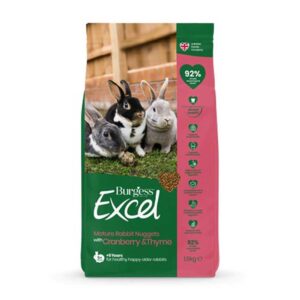
BURGESS EXCEL Mature Rabbit Cranberry, 1.5Kg
Original price was: €8.99.€7.19Current price is: €7.19.